How an 1893 Railroad Panic Still Shapes Salt Lake City Home Prices
August 20, 2026
August 20, 2026
On a cold Saturday in December 2025, Salt Lake City opened its first new regional park in more than 60 years. Kids tested out a sandhill crane-shaped climbing structure and a set of rainbow slides built to echo the water park that used to sit on the same ground. Mayor Erin Mendenhall stood near the ribbon and said something that had nothing to do with playgrounds and everything to do with real estate: the west side needed more park space because, in her words, large parks have not historically been built there.
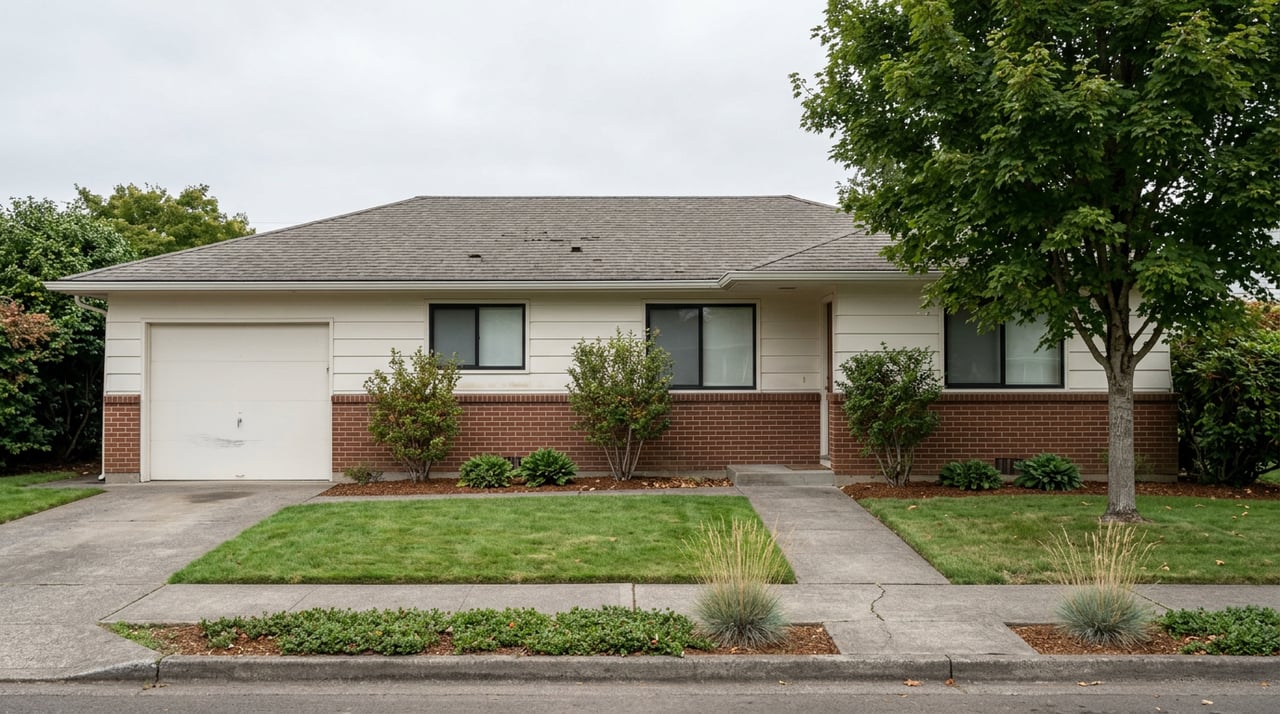
Three miles east, in Sugar House, the median home sold for about $655,000 in February 2026, up nearly 3 percent from a year earlier. In Glendale, the neighborhood where that new park now sits, homes were changing hands for closer to $370,000 that same spring. Same city, same tax rate, same school district boundaries in some cases, and nearly double the price.
If you have been comparing Salt Lake City neighborhoods on a portal, you have probably already seen the citywide median price and moved on. That number, somewhere around $585,000 over the three months ending in May 2026, is not wrong. It is also not describing any neighborhood that actually exists. Salt Lake City's median is a blend of at least two markets that behave differently, price differently, and got that way for a specific, traceable reason that has almost nothing to do with the condition of the houses themselves.
Ask a local why the east side costs more and you will usually get views, the University of Utah, or foothill lots. All true. None of it explains why the gap is as wide as it is, or why it runs almost exactly along State Street and I-15.
The city's own Westside Master Plan lays out the actual mechanism. In the 1890s, developers platted streetcar subdivisions on the west side, including the Poplar Grove subdivision and the nearby Burlington Addition, betting that rail access would pull homebuyers west the same way it was pulling them into other new Salt Lake neighborhoods. Then the Panic of 1893 hit, a national downturn rooted in railroad industry troubles, and many of those planned subdivisions existed only on paper for years. Homebuilding on the west side did not really pick back up until after the World Wars, and Glendale and Poplar Grove were not fully built out until the 1950s.
By the time the neighborhoods filled in, the city had already routed I-15 and I-80 through the corridor, physically walling the west side off from downtown in a way the east side never experienced. The old Union Pacific rail line that once ran through the area was eventually converted into a paved path called the 9 Line Trail in 2011, and for decades that former rail corridor served as the informal boundary between Glendale and Poplar Grove. A delay in one decade, reinforced by a freeway decision in another, is still visible in a spreadsheet of 2026 sale prices.
Here is what that history looks like in current numbers. These are neighborhood-level medians, not citywide averages, so they show the spread the blended number hides.
| Area | Median sale price | Period |
|---|---|---|
| Sugar House | ~$655,000 | February 2026 |
| Central City | ~$381,000 | March 2026 |
| Glendale | ~$370,000 | March 2026 |
| Salt Lake City, all neighborhoods combined | ~$585,000 | 3 months ending May 2026 |
A buyer who anchors on that $585,000 citywide figure and then finds a $400,000 listing on the west side might assume they found a discount on a normal Salt Lake City home. What they actually found is a fairly priced home in a submarket that has run 30 to 40 percent below the east side for most of a century, for reasons that trace back to a 19th century financial panic rather than anything wrong with the house.
A price gap that has held for a hundred years is not, by itself, a reason to expect it to change. What makes this moment different is that the city has been putting real money and real planning attention specifically into the neighborhoods on the low side of that gap, and it has happened in a tight, recent window.
Glendale Regional Park, the one that opened its first phase in December 2025, was funded by an $85 million bond that Salt Lake City voters approved in November 2022. It sits on the old Raging Waters and Seven Peaks water park site, and its second construction phase, which will add a skating ribbon, a skatepark, and a kayak launch on the Jordan River, is set to begin construction in late 2026.
That park is not an isolated project. In the same window:
None of these are the kind of headline that moves a median price by itself. Together, they describe a city government treating the west side as a place worth active, coordinated investment rather than a place development happens to eventually. That is a different signal than a single new coffee shop or a rezoning notice, and it is the kind of pattern that has preceded price convergence in other cities once the infrastructure catches up to the location.
If you are deciding between an east side and west side home in Salt Lake City right now, the honest way to read the gap is as a timing question, not a quality judgment. A $370,000 Glendale home and a $655,000 Sugar House home are not the same product at different prices. They are two different bets: one on a location that has already priced in its advantages, and one on a location where the public investment is newer than the price tag reflects.
That does not mean every west side block will appreciate faster than every east side block over the next five years. It means the usual shortcut, where a lower price signals a lesser neighborhood, does not hold up once you know why the price is lower in the first place. Worth watching if you are weighing this trade-off: the Northwest Community Plan's path through City Council, whether the CRA moves the Peacock Blocks from land assembly into an actual development proposal, and how Glendale Regional Park's second phase changes the neighborhood once it is finished sometime after 2026.
Does the lower price on the west side mean the homes are lower quality? Not inherently. The price gap traces to a documented pattern of delayed development and freeway placement dating back more than a century, not to the condition of individual homes. Condition still varies house to house the way it does anywhere, which is why a walkthrough and inspection matter regardless of which side of the city you're looking at.
How fast could this price gap actually close? There is no fixed timeline. Public investment like the Northwest Community Plan and the Glendale park buildout tends to move over years, not months, and price convergence in other cities that followed similar patterns has typically taken longer than any single election cycle.
Should I buy on the west side if I want appreciation, or is that just speculation? Treat it as one factor among several, not a guarantee. A concentration of city investment is a meaningful signal, but personal timeline, budget, and how a specific home fits your life should still lead the decision.
Comparing Salt Lake City neighborhoods gets easier once you know which number is doing the explaining and which one is just an average. If you want a read on what a specific budget actually buys on either side of that line right now, Orson Whitmer can walk you through the comparison street by street.
Stay up to date on the latest real estate trends.
His in-depth knowledge of the area is a valuable asset. He can guide you to the right neighborhoods, uncover hidden gems, and help you find the perfect property that aligns with your unique needs.