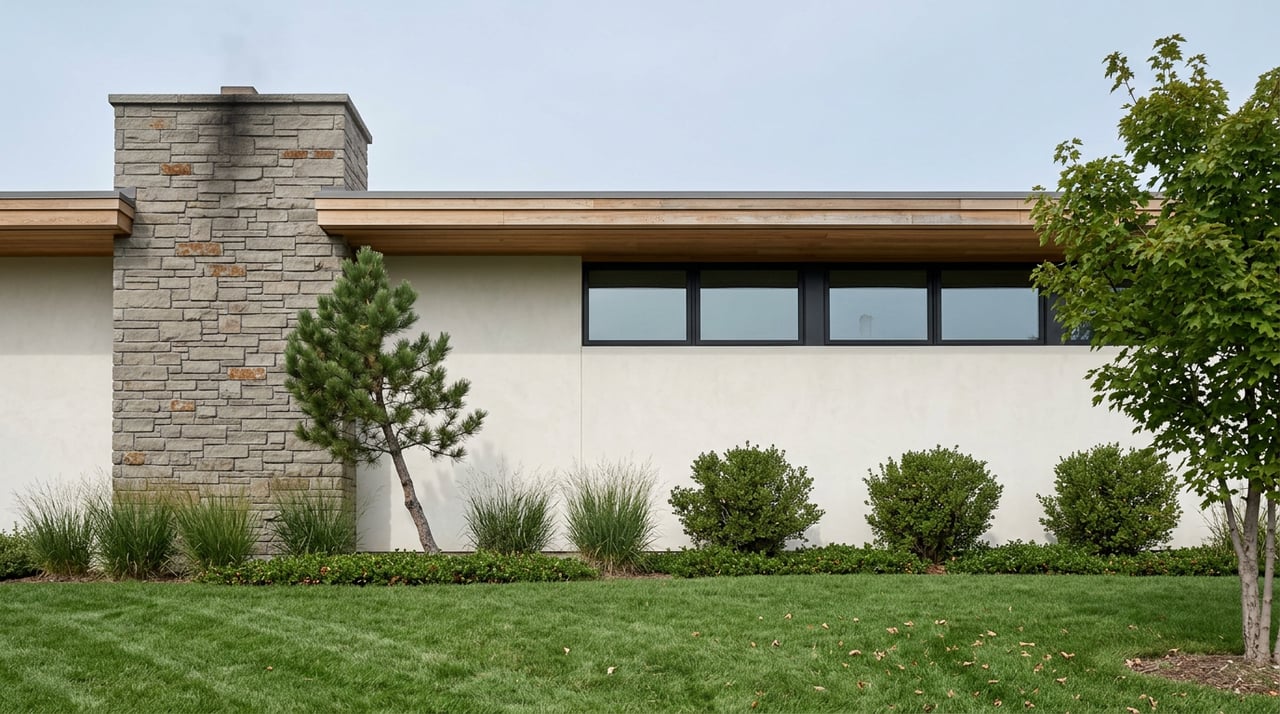
Farmington Isn't One Housing Market. It's Two, and Only One Is Finished
September 3, 2026
September 3, 2026
Pull up three different sites this week and search Farmington and you'll get three different answers to the same question. Redfin puts the median sale price at $703,000, based on closings through December 2025. Movoto lists the median asking price at $749,000 for August 2026. Zillow's automated estimate, last updated in February 2026, pegs the average home value at $682,135.
None of these numbers is wrong. They're just not measuring the same thing, and the gap between them is bigger than rounding. Once you understand why they diverge, you'll also understand something more useful: why two homes ten minutes apart in Farmington can carry price tags that don't seem to relate to each other at all.
Redfin's $703,000 is a median sale price, meaning it only counts homes that actually closed, in this case through last December. It looks backward. Movoto's $749,000 is a median list price for August 2026, meaning it counts what sellers are currently asking, whether or not a buyer has agreed to pay it. It looks forward, and it includes homes that may sit, get reduced, or get relisted. Zillow's figure isn't a price at all in the transactional sense. It's a model-generated value estimate averaged across the entire housing stock, including homes that aren't for sale.
So you have a rearview mirror, a windshield, and a satellite photo, all labeled "Farmington." A buyer comparing this city to Kaysville or Layton using one source and a competing neighborhood using another is comparing three different instruments, not three different markets.
That said, methodology only explains part of the spread. The rest comes down to geography, and that's the part worth spending real time on.
Farmington's pricing splits cleanly along an east-west line, and it isn't subtle once you know to look for it.
| Area | Product | Typical Range |
|---|---|---|
| East bench, near the foothills | Larger lots, newer single-family construction | $700,000s to $900,000+ |
| Station Park core | Attached townhomes, walkable to retail | High $400,000s and up |
| North Farmington Station corridor | New apartments, entry-level attached product still building out | Priced closer to entry-level, product mix still forming |
Sego Homes' Sky Terrace townhomes at Station Park start from $489,000 for a three bedroom, two and a half bath layout, close to the Cinemark theater, the shops, and the FrontRunner stop. That's a mature, walkable product in an area that's been developed for over a decade. The east bench is the opposite story: larger lots, quieter streets, and a price premium that reflects how little buildable land is left up there.
Between those two established zones sits a third area that doesn't show up clearly in any portal's median because it's still mostly empty. That's where the real story is.
Northwest of Station Park, across roughly 350 acres, sits an area the city calls North Farmington Station. It's largely undeveloped land bordered by I-15 to the east and the Denver and Rio Grande Western Rail Trail to the west, and city officials have been planning it for years as the next phase of growth after Station Park's retail buildout.
What makes this parcel different from an ordinary greenfield site is how the city is paying to open it up. Farmington designated the area a Housing and Transit Reinvestment Zone, which lets the city fund infrastructure using tax-increment financing: the additional property tax revenue generated by the zone's own rising value, rather than a citywide tax increase or bond. In practical terms, the roads and utilities needed to unlock this land are being paid for by the growth that land itself is expected to produce.
That structure is why the project has kept moving even in a high interest rate environment. The public side of the ledger, roughly $30 million in infrastructure including Innovator Drive, which opened to traffic in 2024, didn't have to wait on private capital costs the same way the buildings themselves do. Farmington's mayor described the new district as the "natural twin sibling" to Station Park's retail success, and the comparison is apt: what happened to shopping and dining in that corridor since Station Park opened in 2011 is what officials expect to happen to housing and office space over the next decade or so.
The scale on paper is substantial. City planners have discussed potential for up to 2 million square feet of commercial space in buildings as tall as six stories, alongside as many as 4,000 new residential units mixing apartments and townhomes. City estimates put the total private investment at up to $3 billion, spread across a projected 10 to 15 year buildout.
This isn't all still on paper. A four-story, 315-unit apartment complex called The Trail broke ground in 2025 at 1674 Burke Lane, just over a mile from Station Park, developed by Evergreen Devco. It's one of several apartment projects underway along Station Parkway at the southern edge of the reinvestment zone. Farther north, plans call for commercial office space closest to the freeway, stepping down to no more than two-story townhomes as you move west toward the rail trail, keeping the densest product closest to I-15 and the quietest closest to the trail corridor.
None of this looks like the finished, walkable Station Park experience yet. It looks like a construction zone, because for the next decade or more, it will be one.
If you're weighing Farmington against Kaysville, Layton, or another Davis County city, the single median number obscures more than it reveals. Farmington isn't one market moving as a unit. It's a finished, land-constrained east side where scarcity is already priced in, and a financing-driven west side where the price you see today reflects an area still being built, not an area that's been fully valued yet.
Buying on the east bench today means buying into a product that's largely done. There's not much more foothill land to develop, and the premium reflects that. Buying near the North Farmington Station corridor means buying into a zone whose final character, how dense it gets, how much of it ends up as owner-occupied housing versus rental, how the commercial mix shakes out, is still being decided over the coming years. That's not automatically a better or worse position. It's a different kind of bet, and it's worth knowing which one you're making before you anchor on a single median price from a single source.
Does buying near the North Farmington Station zone change my property taxes? Tax-increment financing funds the zone's public infrastructure out of the future growth in assessed value within that district. It's a financing mechanism for the city's capital projects, not a special tax rate applied to individual homeowners. If you want specifics on how a particular parcel is assessed, the Davis County Assessor's office is the right place to check.
How long will the west side of Farmington feel like an active construction zone? City officials projected a 10 to 15 year buildout window when the initial infrastructure was completed in 2024, which puts the likely finish line somewhere in the mid to late 2030s. Anyone buying near the corridor today should expect ongoing construction activity for years to come, not months.
If you're trying to figure out where a specific Farmington address falls on this map, whether it's sitting on the finished side of the city or the side still being built, that's exactly the kind of question a home valuation should answer with more than a portal estimate. Orson Whitmer can walk through what's actually happening on your street, not just what an algorithm assumes about your zip code. Get a free home valuation to start the conversation.
Stay up to date on the latest real estate trends.

His in-depth knowledge of the area is a valuable asset. He can guide you to the right neighborhoods, uncover hidden gems, and help you find the perfect property that aligns with your unique needs.